
We have been planning a trip to see the lava flowing into the ocean on the Big Island since we decided to stay in Hawaii for the winter. Our preparations included monitoring the USGS Volcano web site, http://hvo.wr.usgs.gov/ and weather on several sites including WindyTY.com, and the Pacific Briefing Package from NOAA.
The island of Hawaii is large enough to contain the land masses of all the other islands combined, and it is getting bigger daily due to the several active volcanoes. Kilauea Volcano has an active lava field that flows into the ocean at a place called Kamokuna Bay, on the south east side of the island.
It is not a place that is easy to get to by boat. Among all the sailors we have spoken to about this trip, very few ever sailed to the Big Island, and those who did, just sailed to Kona, on the leeward side. To get around to see the lava flow, we had to sail to the windward side. All commonly referred to it as a “rough passage.” The challenges mentioned included the strong trade winds which bash-up against the island, crossing the channel with large, choppy waves, and getting around the eastern and southern points where the winds and waves tend to be the worst. The trip we were planning trigger serious cautionary tales, as sailors always share their worst experiences freely.
The lava flow is on the eastern side, so we needed to do some serious planning. We saw a weather forecast for the milder “Kona winds,” and realized this was our weather window. We needed about 5 days, and it looked possible. We decided to sail from Lanai to Hilo on the east side of the Island in one 130 mile leg. After a day to rest and provision, and visit the Hilo Harbormaster, we would sail around the eastern point to see the lava, and then sail down around the southern tip back to Lanai, clockwise, for another 270 mile leg.
We left on Dec. 11th at 8:30 AM. We sailed with a full main and the #4 jib for 12 hours, and then put in a double reef. We sailed when the winds we strong enough, and motor-sailed when necessary with the assistance of the autopilot. The NKE autopliot worked fine for the first 10 hours, but then failed (for no apparent reason). We steered the boat by hand overnight in two hour shifts. During the morning hours I shifted over to the the backup autopilot, the Simrad system, and it worked fine in compass mode. We came into Hilo and after cruising the options, we dropped anchor in 10 feet of water in Reeds Bay. This leg took a total of 33 hours, and we put 25 hours on the engine.
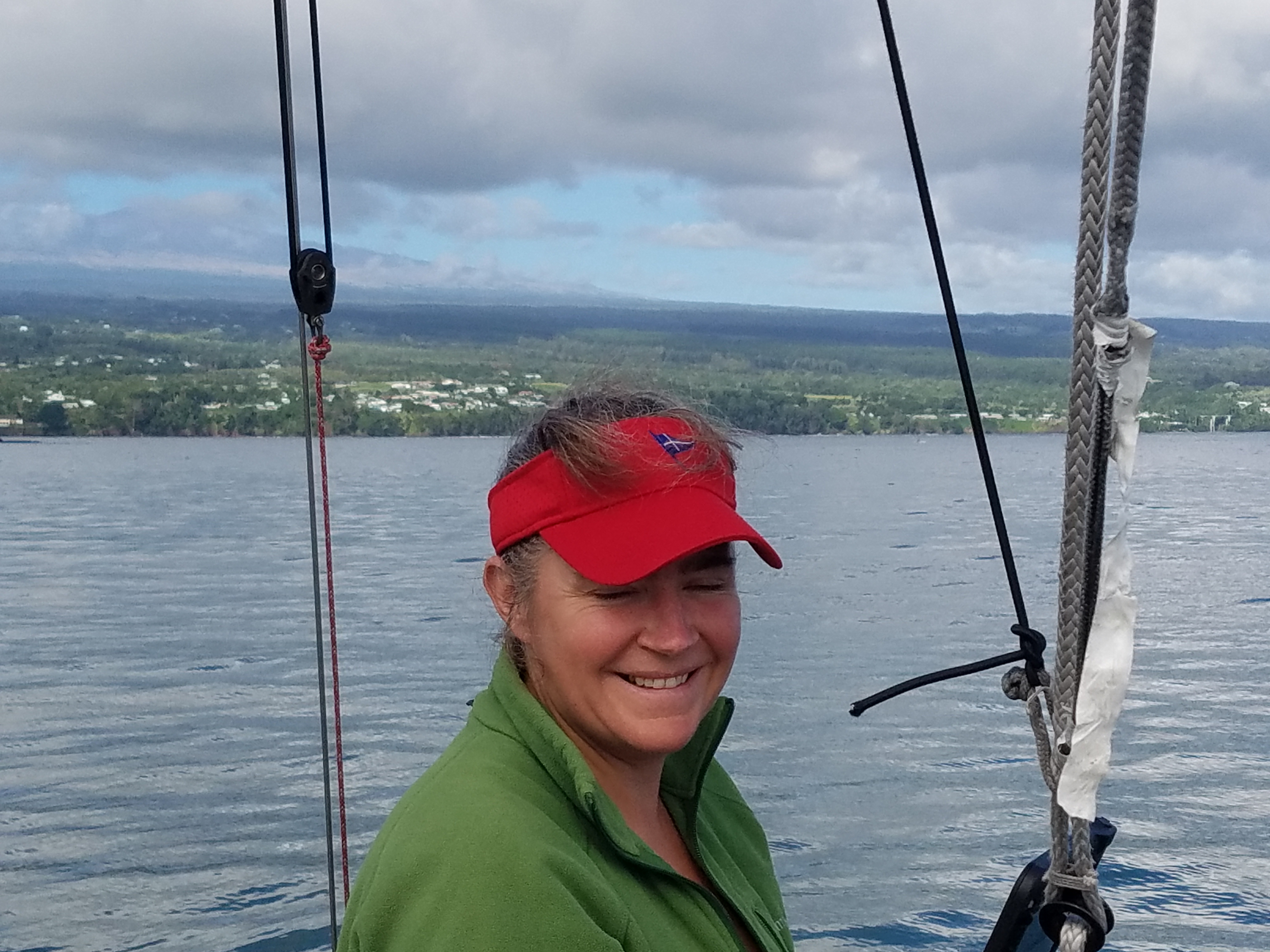
We spent the next morning preparing to go into Hilo via the inflatable dingy. It inflated in less than 10 minutes, and we rowed over to a small landing in front of a nearby apartment building. We walked 2 miles into Hilo and found a Thai resturant for lunch. I went to the Harbormasters office while Megan went shopping for provisions. I got our official Temporary Mooring Permit from Willaim, who updated Avion’s record in the State’s Boat registry with my new Coast Guard documentation. He was friendly and commented that the about 200 slips on the Big Island are all taken, that cruising boats have to anchor-out. If we want to come back to the Big Island next year, we will plan accordingly. I met up with Megan, and we walked back to the boat with lots of good food. We stopped at the fish market and bought frozen shrimp, and closer to the boat, some ice, and then rowed back out to Avion with everything.
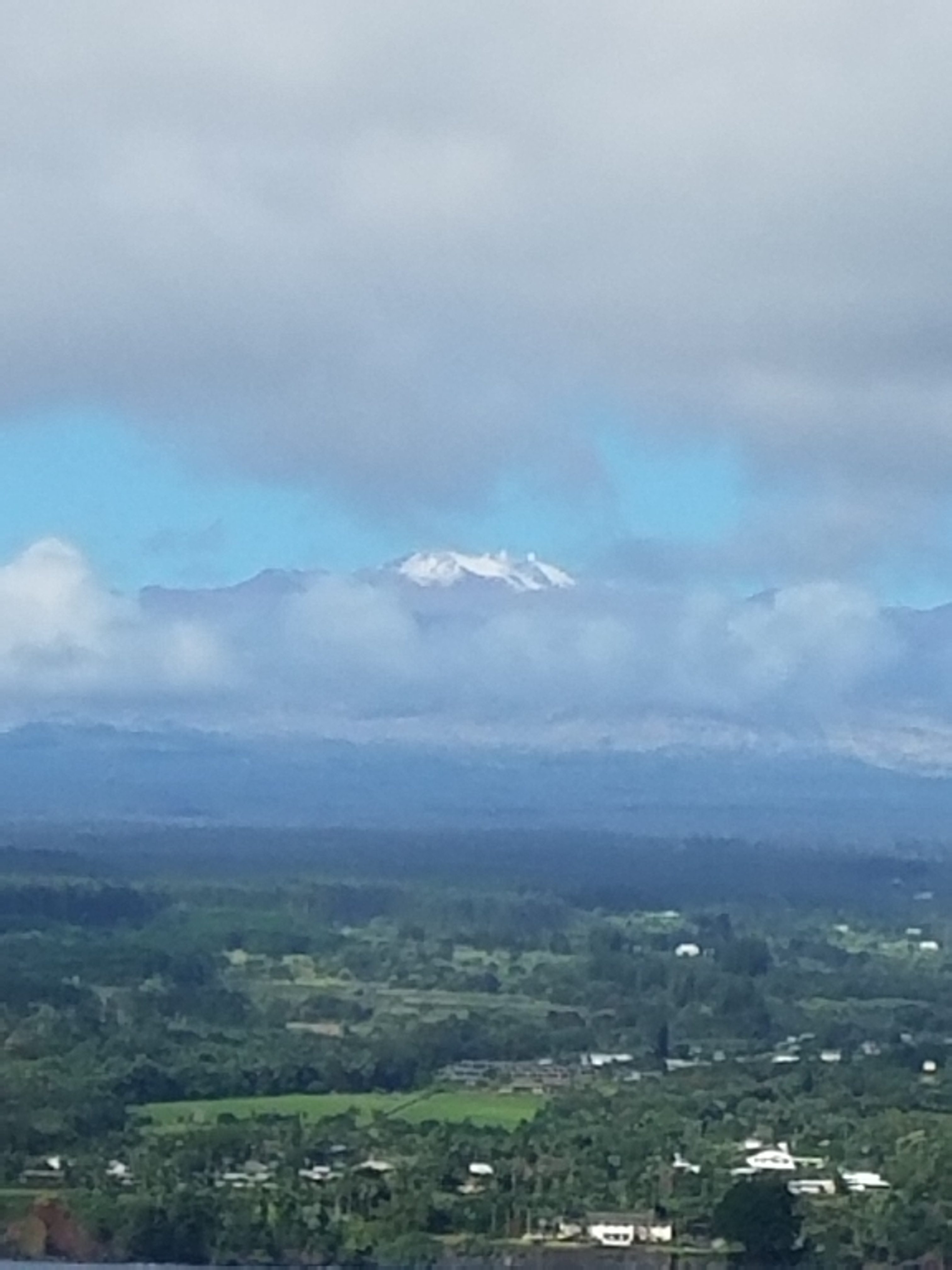
Hilo is a funky but beautiful place. The original economy was based on sugar, but has been in decline since that shut-down. It has one of the old volcanoes in the distance that one rarely sees in full profile, but we caught a glimpse of the top of the cater, covered in snow. Hilo holds the dubious record of the wettest city in the USA, with more than 100 days of rain per year, on average (hard to believe that anyplace can be wetter than Seattle). We were lucky to get and day and a half of sunny and mild weather.

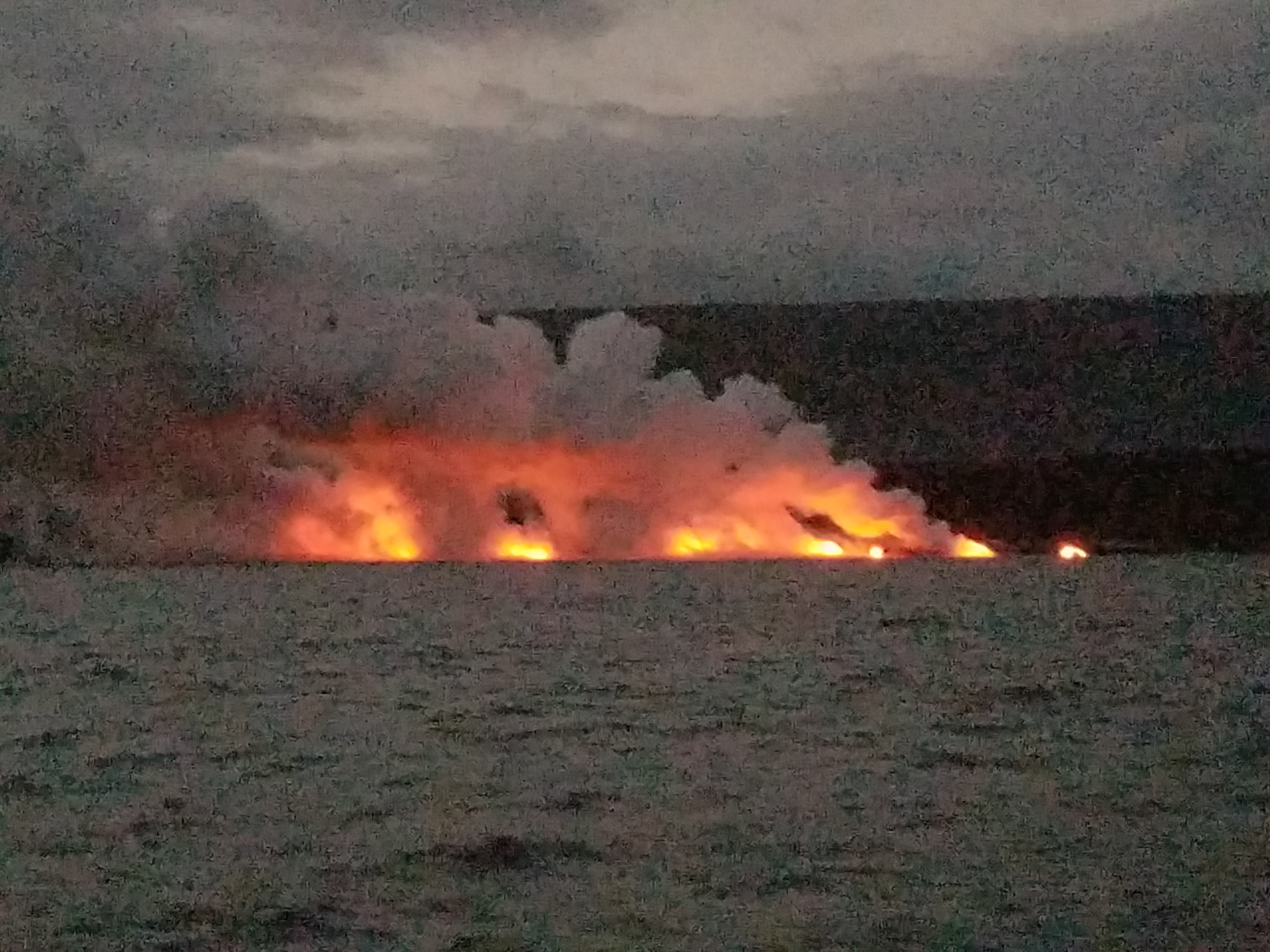
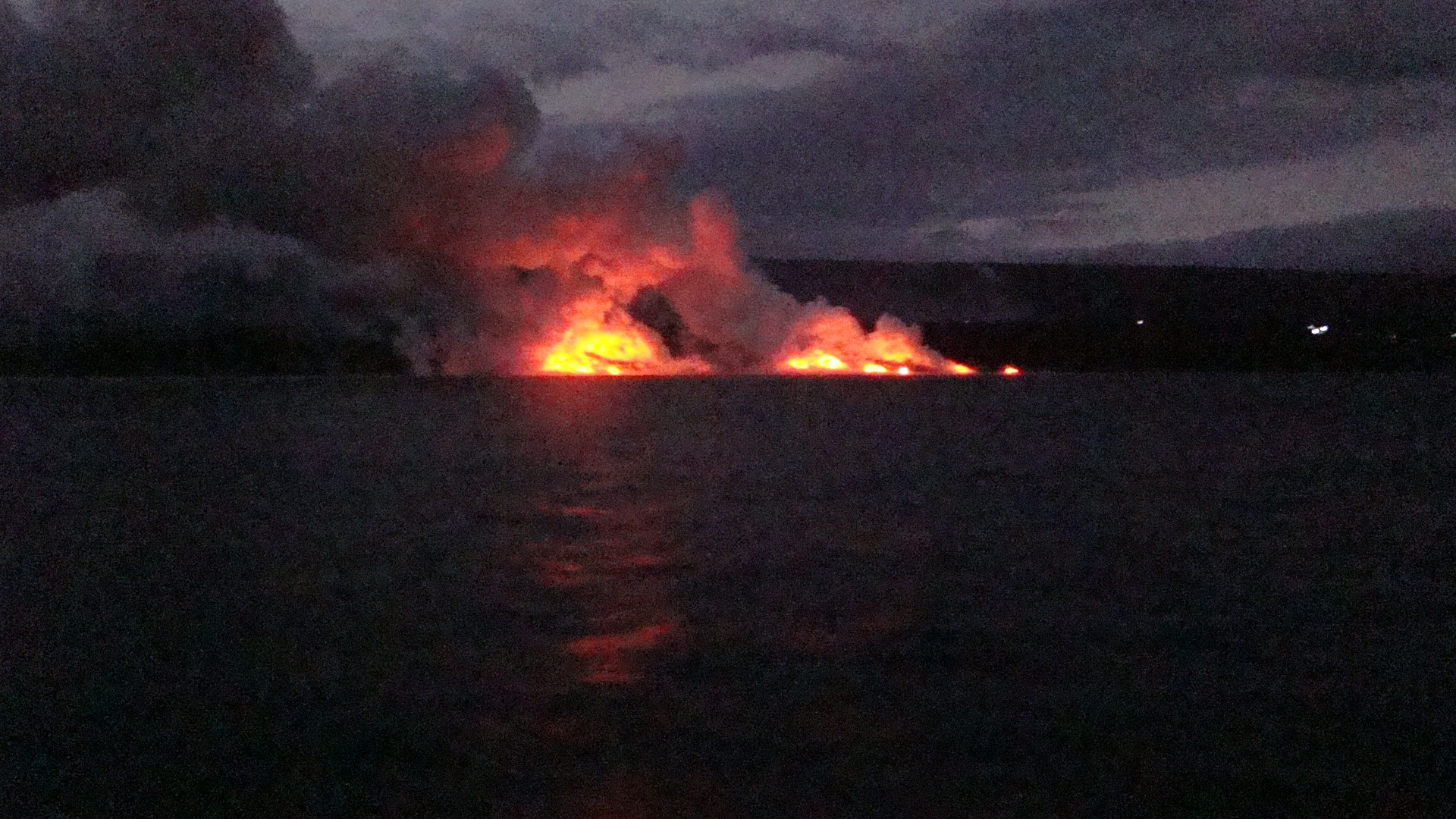
We left Hilo on Dec. 14th at 11:30 AM and motor-sailed 60 miles to Kamokuna Bay. We left with a loose idea of getting there around sunset, so we could see the glow of the lava in the dark, and that is exactly what happened. From a distance of 10 miles, we could see a large plume of what looked like smoke, under a strangely yellow sky that partially blocked the sun. As we got closer, we saw an orange glow at the base. The smoke was actually steam and sulphur, and other odd chemicals; referred to locally as “VOG.” The pictures we took speak for themselves. It was powerful and otherworldly.



We worked our way back to Lanai in 42 hours, with two overnights. We did two hour shifts most of the time. We had a mixture of sunny and mild winds, heavy winds, squalls with rain, rough and choppy waves, and shifty winds. It was challenging and exciting sailing. We both loved every minute of it.
By the time we return to Kewalo Harbor in Honolulu, our home base for the winter, we will have sailed 540 miles over two weeks. Adventures like this are why we are here. Stay tuned…


 avionbianca
I loved that post! I have been fascinated by lava flowing into the ocean since we were shown a movie about it in elementary school. Thank you for being brave enough to go there and for sharing your adventure. Merry Christmas Tom and Megan.