
“Shadowing” a race is something we started doing in SF. If we wanted to do a race, but had not registered for it, we would join in and do the race; or, if we missed the race on a Saturday, we would sail it on a Sunday. We sailed to Maui to participate in the Lahaina Return race, the most popular sailing race in Hawaii. It was cancelled due to the unprecedented threat of two hurricanes, Madeline and Lester, hitting the islands just before the start on Labor Day, one to the south and one to the north. We were in Moloki when the race was cancelled, and decided to sail the course of the race anyway. We wanted to learn about the race course, and sail downwind, from Maui to Oahu along the north coast of Moloki.

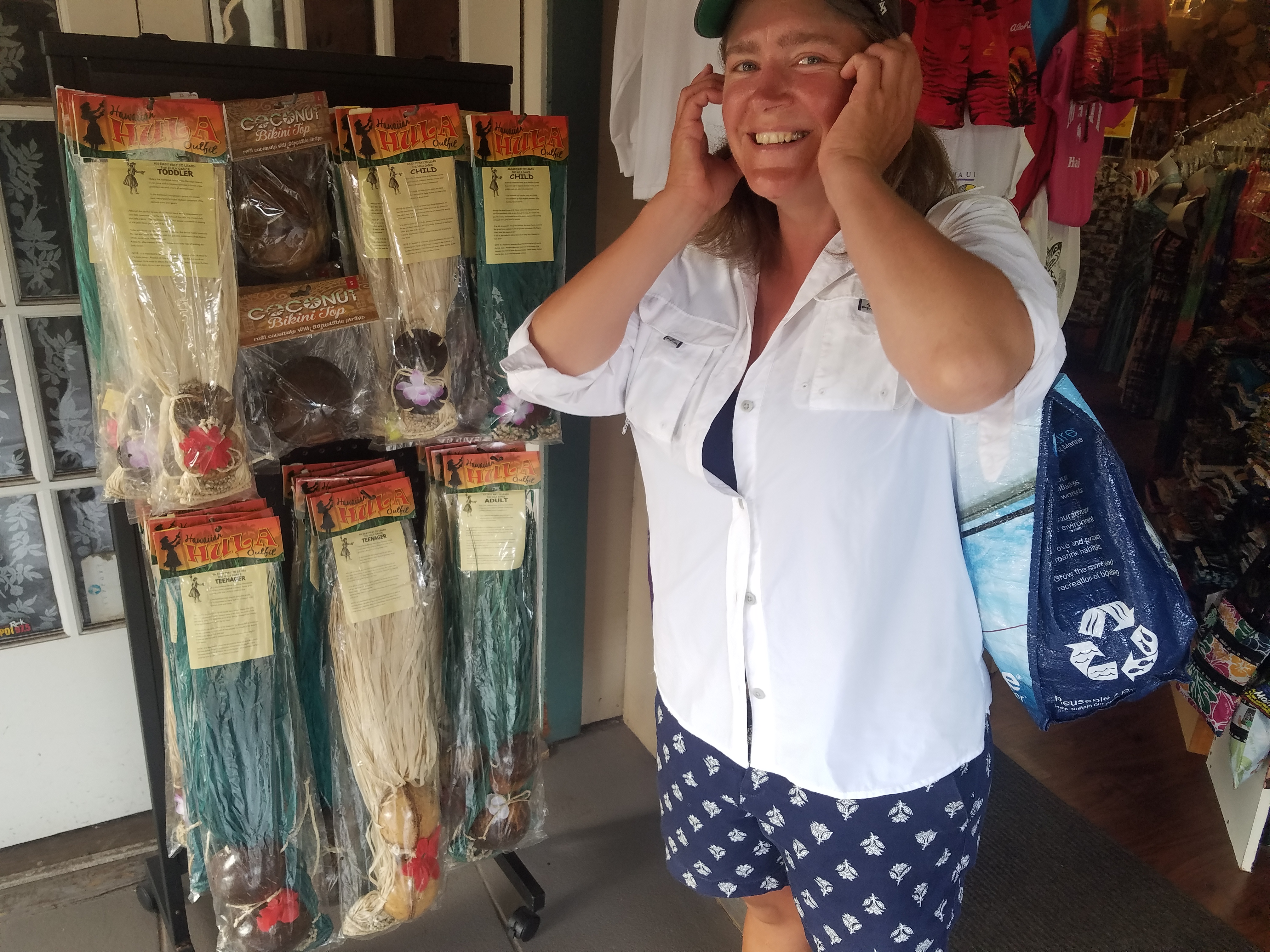
We enjoyed Lahaina. The people at the Lahaina Yacht Club were very friendly, and we went there to eat several times. The historic Banyan tree was a refuge from the sun, and the restored courthouse had a very good collection of historical artifacts from when Lahaina was the center of the whaling fleets in the early 1800s. I liked the original flag that was taken down when the island transitioned from a nation to a territory on July 7, 1898. Megan bought a hammock, and almost bought a Hulu outfit. We rented a car for 24 hours to ran errands, and took a trip up to Honolua Bay to do research. But after 6 days, we were ready to sail again.


The Lahaina Return race starts in Honolua Bay, a spot of the north western corner of Maui. We sailed there from Lahaina last Monday and dropped anchor in a spot recommended by Charlies Charts, on an 18 foot sand bar. It started raining shortly after our arrival, but it felt clean and refreshing. As soon as we were settled, I pulled out Finnegan (Barbarian Days) and reread the chapter on his life in Lahaina and surfing in Honolua Bay. I love to read about places while I am in them. He writes of massive waves in the winter months, and I was curious in the details of the waves and how they broke on the rocks. While anchoring, I had studied the bottom of the bay and could see how a wave would be shaped as it surged in from the north.

The anchor did not hold; it dragged slowly into the middle of the bay. I pulled out a second reference book (Mehaffy), and it recommended anchoring in the middle of the bay, so I let the anchor find it’s own spot to set. Avion swung on the anchor in response to the swell coming in from the north, and alternatively, to the wind. The wind was often strong enough to hold her sideways to the swell, generating a moderate rock-and-roll in the boat. The pattern was actually enjoyable, after you gave into it, but we both slept lightly. The next day, we had hoped to snorkel, but that was not possible; the water was chocolate brown with run-off from the river that flowed into the bay. Surfers were in the water near the rocks, but there were no waves, so we just relaxed, took turns in the hammock, observed and discussed strategy for “our race.”
We left on Wednesday at 7:00 am, when the race would have started. We sailed toward the northeast tip of Moloki. As we came around the point, we saw a dark squall moving in the same direction. It eventually overtook us and we were in it for about 3 hours, at times in rather heavy rain and 25 knots of wind. We sailed under the main sail only with a double reef and the boat was happy. The air was warm, and we comfortable in our rain gear. We could see well enough to be safe, and the rain was strong enough to beat down the waves and make interesting patterns. It was dynamic and the pattern of the rain beating down on the waves was beautiful.


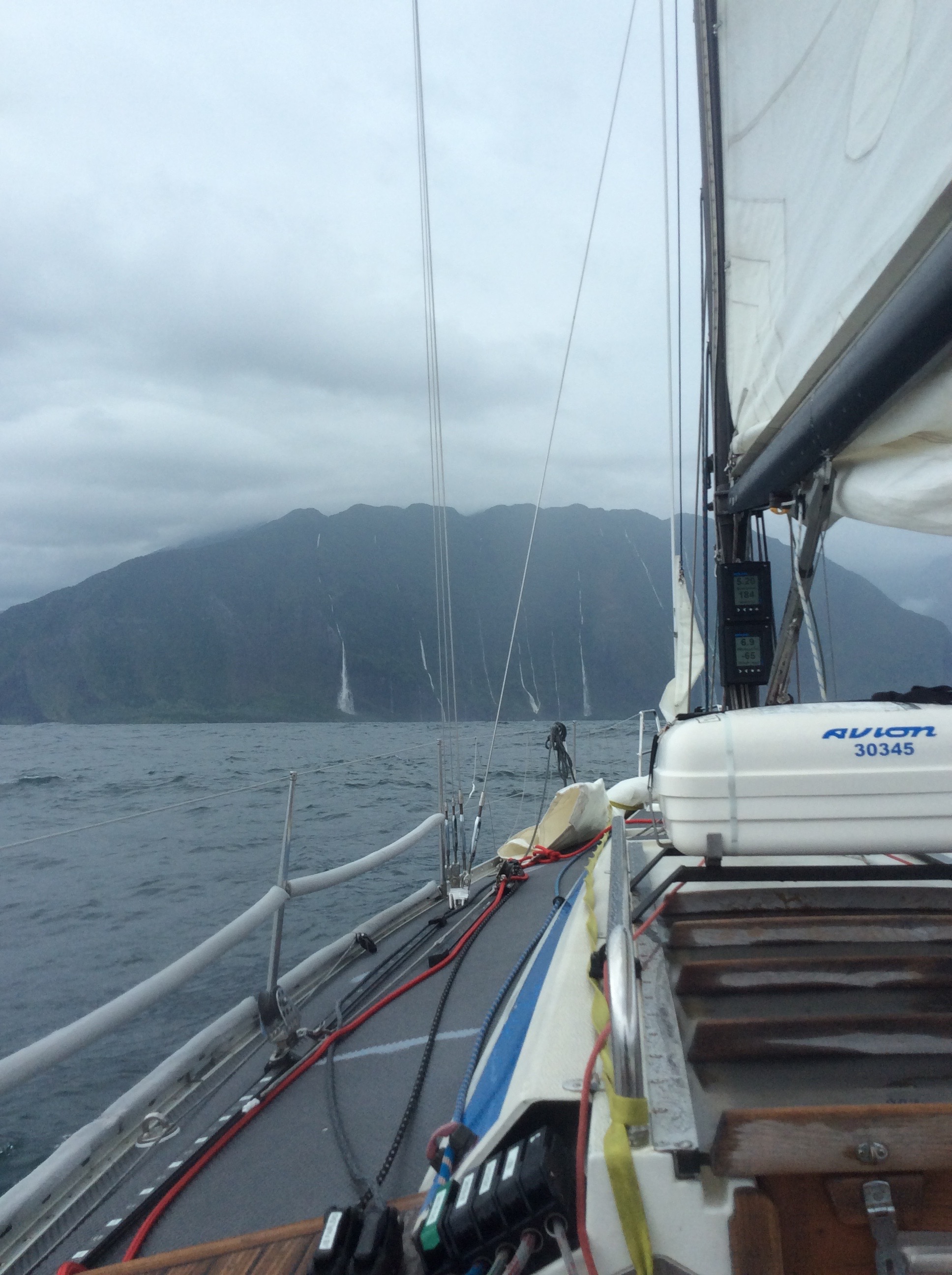
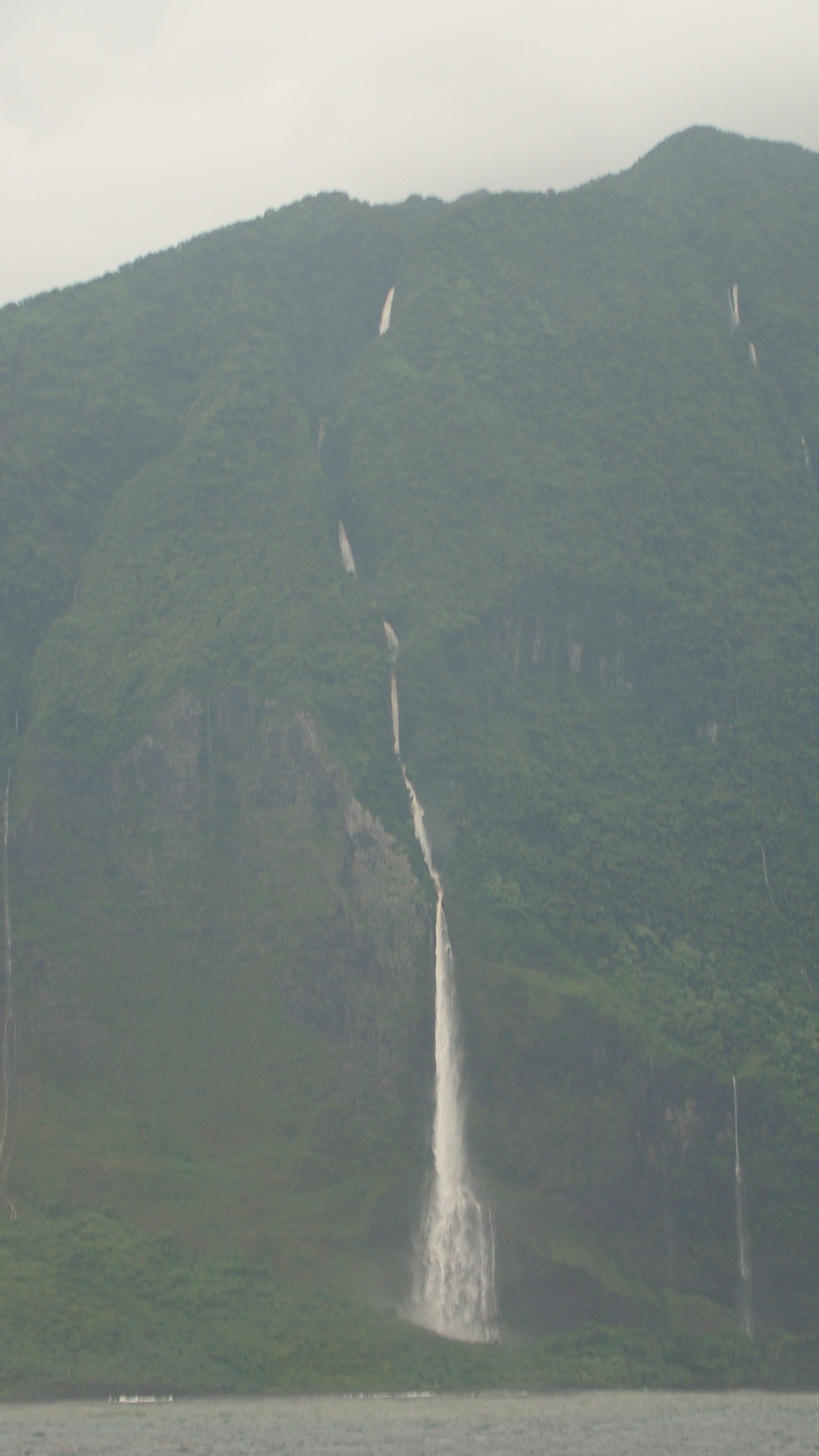
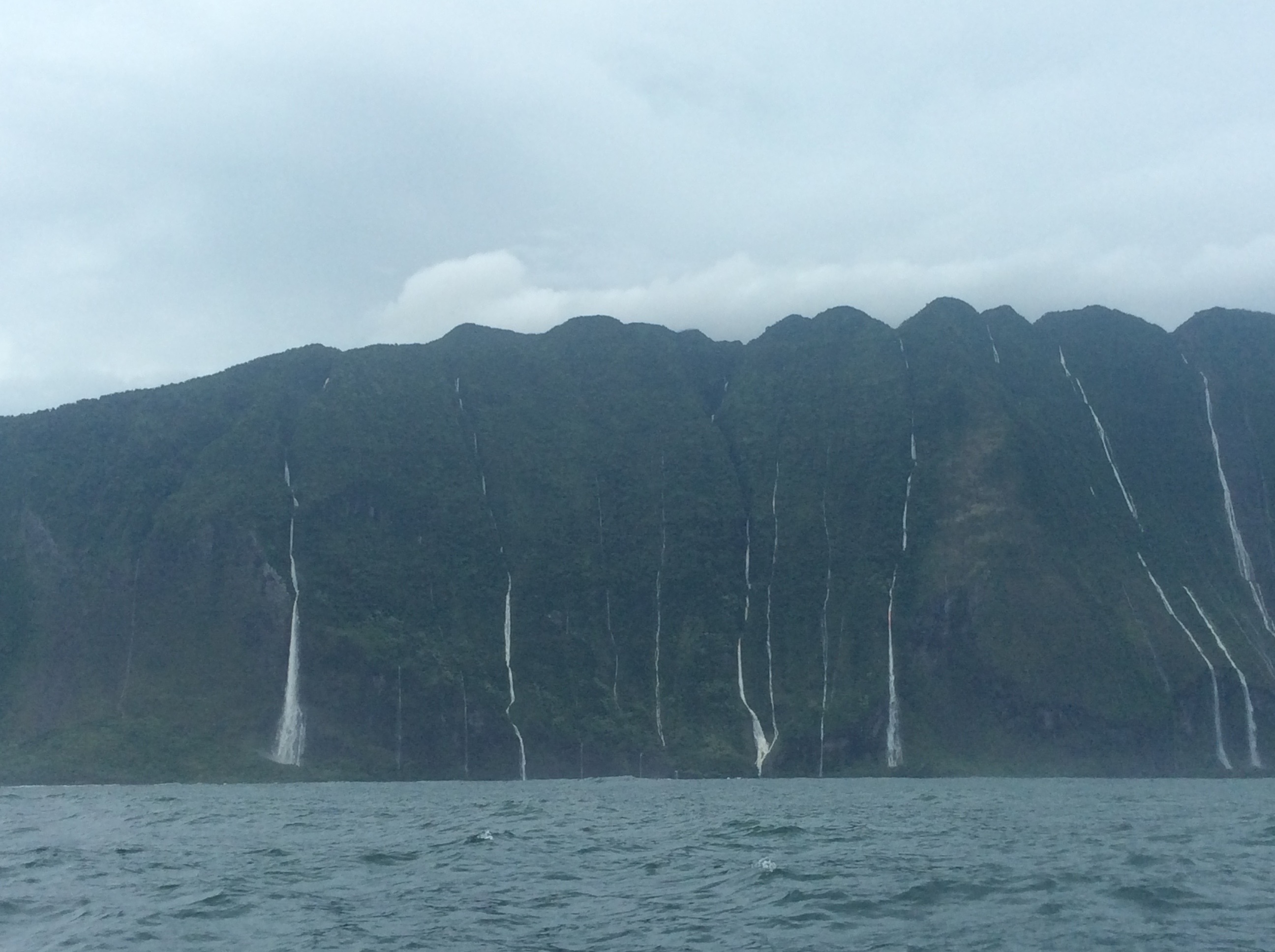
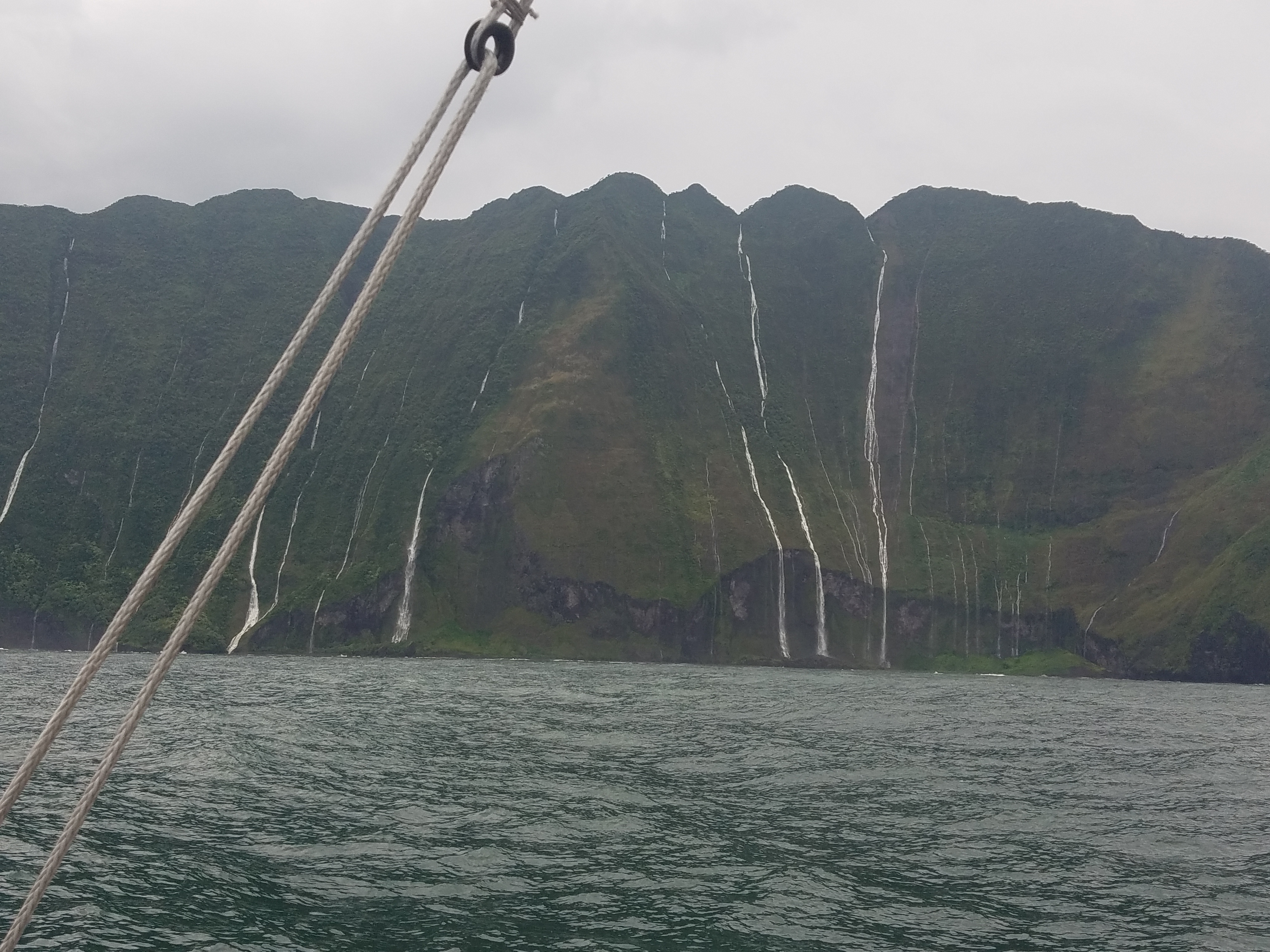
The north coast of Moloki is undeveloped and will probably never be. Once I saw the volcanic structure of the steep 3,000 to 4,000 foot cliffs I understood. Many waterfalls jumped out at us as they were all full of water, flowing at maximum capacity. In one area, we motor sailed in close to get a good look, and could hear the crashing and cascading water. Very exciting.
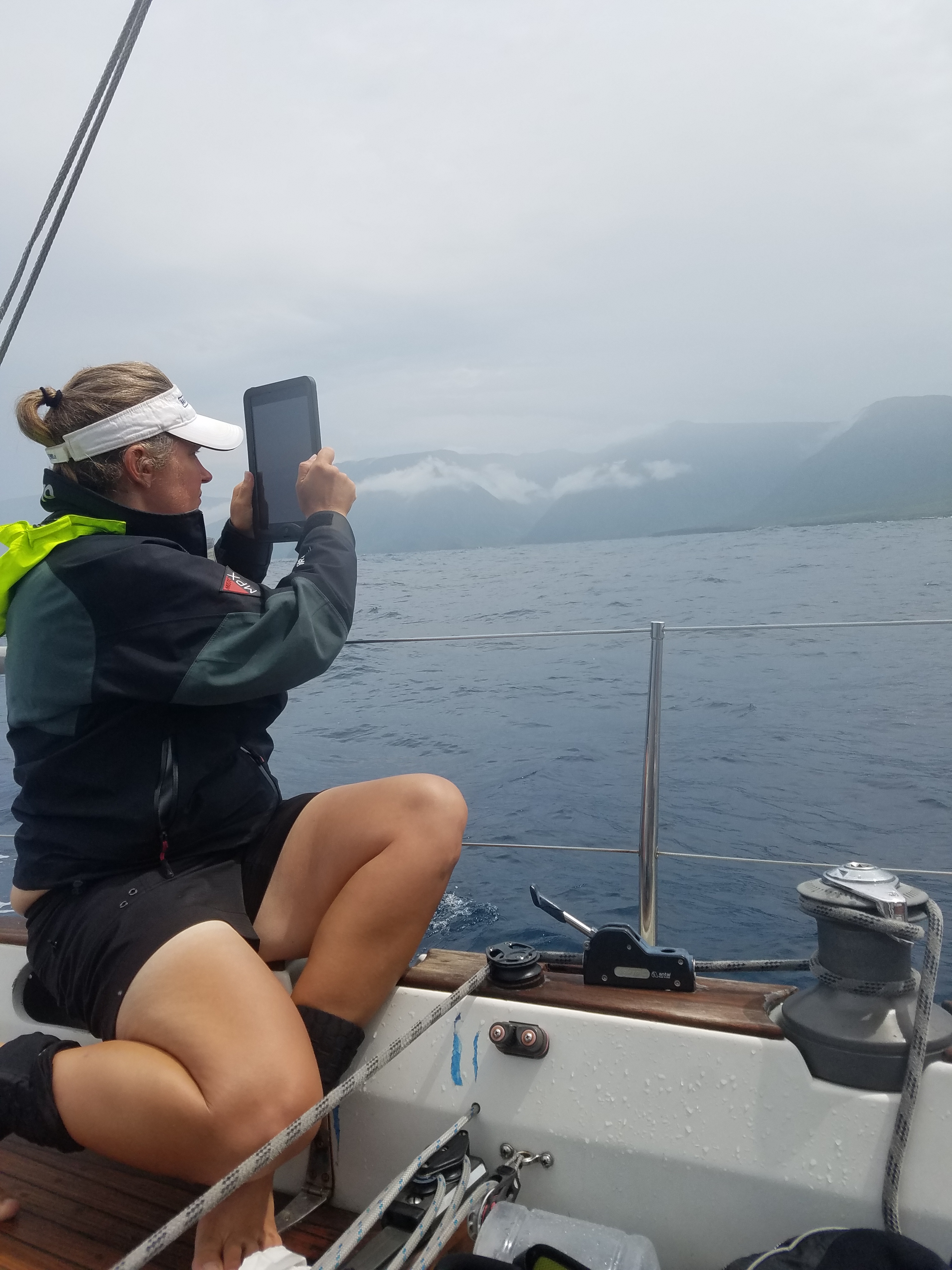

We sailed past the peninsula where the Leper Colony was located. There are still 60 people living there. The plan is to convert it to a national or state park, once they have all died off. It will be quite a beautiful pace to visit. We sailed to a a spot on the western coast of Moloki near where a failed Sheraton resort is located, with beautiful beaches. We anchored under a bluff that protected us from the wind. In the morning, I swam through the heavy current to the beach and explored. I was surprised to find pieces of white coral scattered on the beach, and lodged into holes in black lava boulders. I brought several pieces back to Megan, but she said they were still alive and made me throw them back in the water.


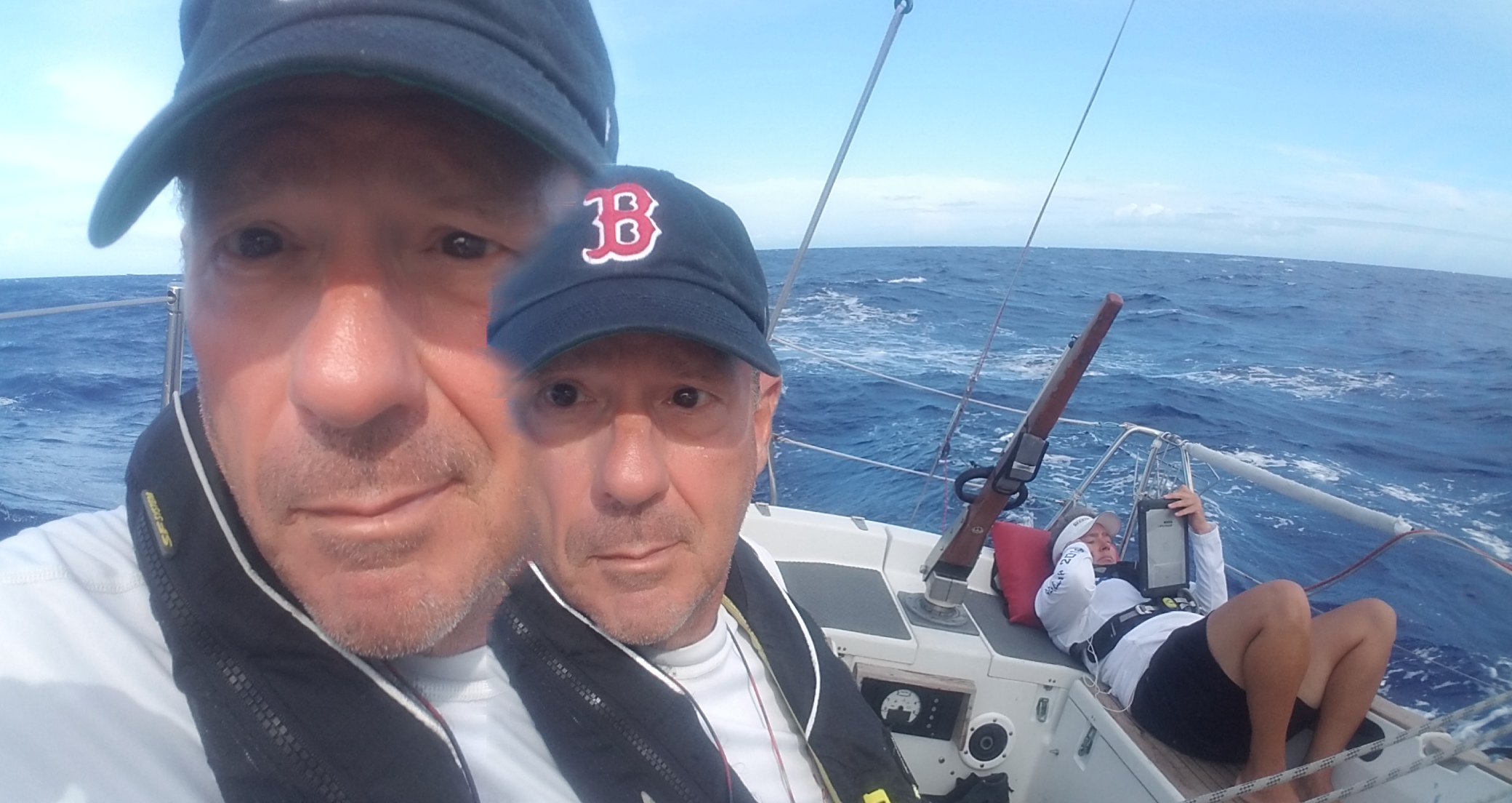
We decided to sail off the anchor. We raised the sail, but only half way. Avion is a dynamic boat; she wants to move. The current was strong, and with a 24 knot wind gust, she surged forward against the anchor line. We had not raised the sail fully, so the boom was low and swinging in the cockpit, and at some point bumped Megan in the head (her Red Sox hat protected her). I was unable to pull up the anchor, and had to wait and be patient. After a couple of minutes, the wind let up just enough to relax the anchor line, and I was able to quickly pull it up and secure the anchor. We were under way.
The rest of the day was “champagne sailing,” downwind in moderate winds of 20-24 knots in the beginning, and then 15-19 knots the rest of the way to Oahu. We sailed the 40 miles in about 6 hours, between 7 and 8 knots of boat speed, under just the main. We started with a double reef in the beginning, went to a single reef in the moderate wind. In the last third of the trip, I tested the NKE gyro-pilot in true-wind mode, and it did fine. We sailed around Koko Head and Diamonhead around 5:30 pm and saw Hoinolulu again. We decided to sail into our slip at Kewalo Harbor, and dropped the main, once out of the wind, as we would finish in a race.
So, we did the race. We may have been the only boat to sail the course this year. We needed two days, but came in first, and learned a lot about the places along the course. Now we want our tee shirts. Stay tuned.


 avionbianca

Leave a comment